

Data helps strengthens the case for dementia investment in Aotearoa New Zealand
We’re looking back through the archives as we acknowledge 40 years of the organisation
Three people develop dementia mate wareware every hour, rising to an alarming four people per hour by 2050!
Alzheimers NZ released this updated figures last year, highlighting the size and scale of the dementia challenge in Aotearoa New Zealand.
But this isn’t the first time the organisation has taken the lead in national dementia research.
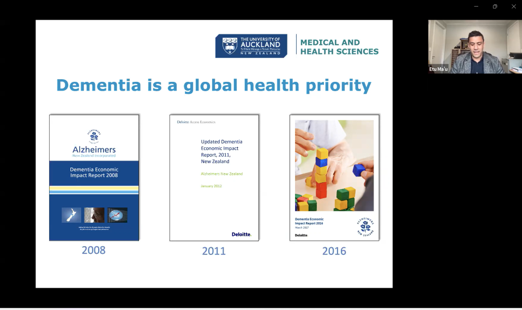
The organisation commissioned the first Dementia Economic Impact Report (DEIR) back in 2008.
At that time, it was the first piece of data and prevalence research in Aotearoa New Zealand.
“It predates my time with Alzheimers NZ… but it’s been such a pivotal part of the work of the health system and the dementia sector since then,” says former Chief Executive Catherine Hall.
“Because before that document, we had no idea how many people there might be with dementia in New Zealand or what the impact of that might be on the economy and on the health sector in an economic sense.”
The 2008 report used methodology that had been developed for Australia and essentially applied the global, population-based rate of dementia to the New Zealand population.
There was also a methodology for calculating the economic impact and the report was commissioned from the same organisation that completed the Australian research.
The DEIR was subsequently updated in 2012, 2016 and 2020.
Catherine says it has been a core piece of research that the whole of the dementia sector and Government have used to understand the impact of the condition.
“One of the ways Alzheimers NZ brings about positive change for people living with dementia mate wareware and their whānau is through commissioning and disseminating research and reports,” she says.
“It became such an important report because agencies such as the Ministry of Health used it, as did other offocials, NGOs and local researchers.
“And, of course, it also informs the sector-wide Dementia Mate Wareware Action Plan – which was most recently acknowledged by Government in the New Zealand Health Plan: 2024 to 2027.”
Landmark prevalence study
Alzheimers NZ recently commissioned and launched the updated infographics in 2025, ahead of the landmark Impact of Dementia mate wareware and Equity in Aotearoa (IDEA) study.
Led by Professor Ngaire Kerse, this study will be the first ever real New Zealand prevalence study and will focus on four ethnic groups – Pākehā, Chinese, Indian and Fijian Indian.
Parallel studies are taking place in Māori and Pacific communities.
“We’re expecting the initial data from that study will start to be available next year, but what’s exciting is that Ngaire is going to present some preliminary findings at our conference in September,” says Catherine.
Working together to make our case through data is one of the breakout sessions at the conference and will focus how data supports national decision-making.
Alzheimers NZ and Dementia NZ are working on a joint national data set which captures the impact of local services and will be part of this session.
CAPTION: DR Etu Ma’u at the launch of the 2020 Dementia Economic Impact Report