

Dementia can be a health system enabler
Alzheimers NZ Board Vice Chair Alister Robertson opened conference 2026 with a plea to officials to see dementia as a health system enabler
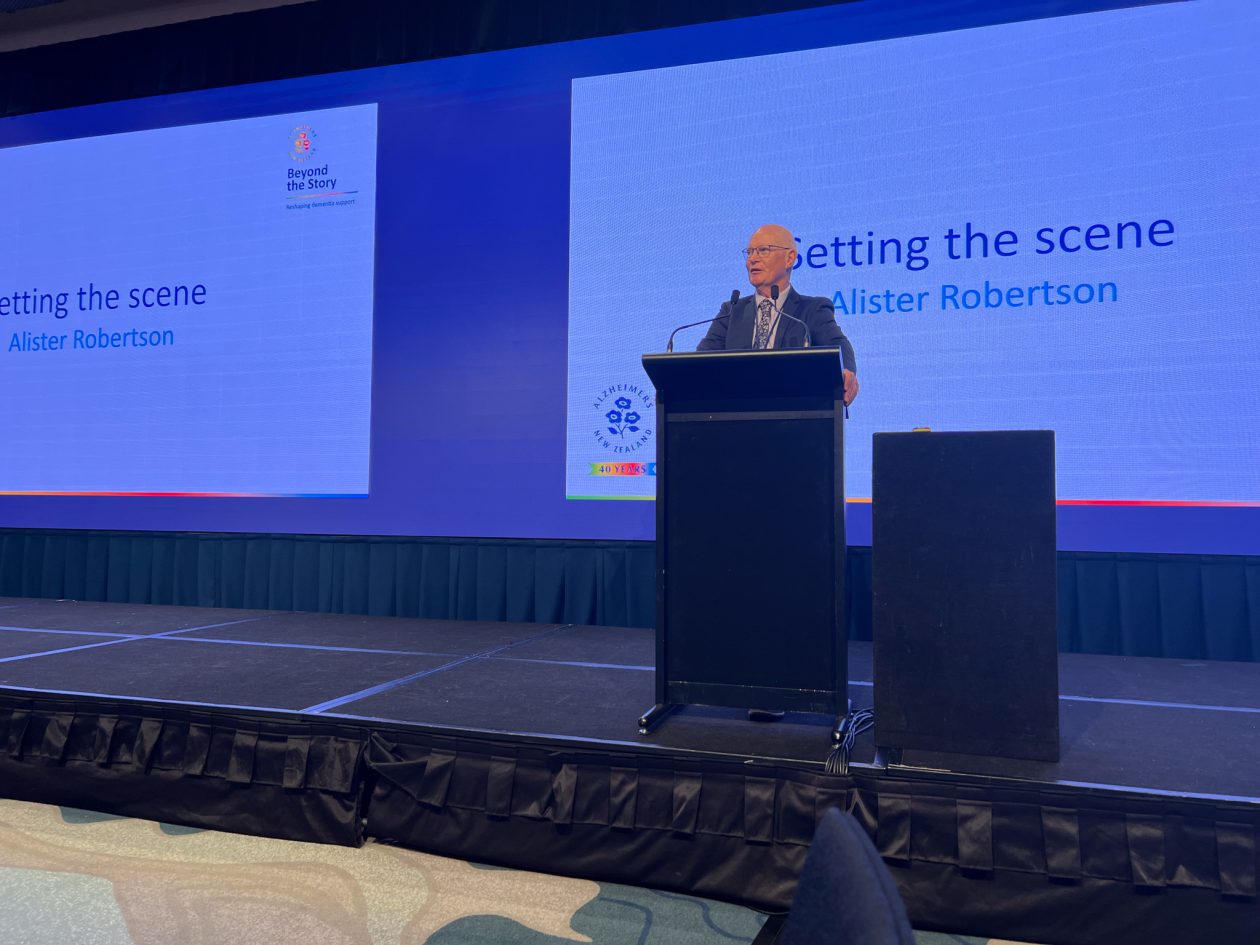
I want to begin with something simple.
I live with dementia mate wareware.
But I am also Vice-Chair of Alzheimers NZ. I am an advocate. I am a member of my community. I have opinions. Quite a few of them, as some people in this room will know. And I still have a contribution to make.
Too often dementia is talked about as though the diagnosis becomes the person. It doesn’t.
People living with dementia are not simply recipients of services. We are citizens and contributors. And we should be partners in designing better services, shaping better policy and building a stronger health system.
Nothing about us without us. That principle sits at the heart of this conference and what I want to talk about this morning, politics.
Political choices will help shape the future of dementia support in this country. And with the Election just weeks away, this is the right time to have that conversation.
We know how big the challenge is.
Around 83,000 of us live with dementia mate wareware today. Three more people develop dementia every hour. By 2050, more than 170,000 New Zealanders will be living with it.
Dementia will cost New Zealand around $10.65 billion a year in inflation-adjusted dollars. Those numbers are confronting. But why should dementia mate wareware be a priority for Government?
Every part of the health sector needs fixing. Every Health Minister is inundated with requests for funding. So, what makes us different?
Our argument is that if Government wants to achieve the health outcomes it has set itself, dementia is part of the solution.
People living with dementia are more likely to present at emergency departments, have unplanned admissions, stay in hospital longer and experience delayed discharge. Without support, we may need residential care earlier.
Now turn that around.
Earlier diagnosis, good care planning and strong community support can keep people independent and at home longer, reduce pressure on hospitals and residential care, and provide better value for taxpayers.
Dementia mate wareware isn’t simply another health problem needing Government funding.
It can be a health system enabler. The question is not whether Government pays for dementia. It already does, through emergency departments, hospital beds and aged residential care. The question is whether Government invests earlier and more wisely, or pays more later.
The Dementia Mate Wareware Action Plan 2026–2031 identifies five priorities: promoting brain health; timely diagnosis and good management planning; better community support; stronger formal and informal workforces; and effective governance.
These aren’t radical ideas. They are practical ones. And they have just received further independent endorsement.
The Ministerial Advisory Group on aged care, in its report A Place to Grow Old: Securing the Future of Aged Care, specifically endorses the Action Plan.
That’s important. It confirms the dementia community has developed the right roadmap. And it reinforces a crucial point.
If we want older New Zealanders to remain well, independent and at home longer, we must fund the community services that make that possible.
It makes no sense to fund expensive residential or hospital care while underfunding services that can help keep people out of those settings.
The evidence is there. The Ministerial Advisory Group has done its work. The Action Plan is there.
Now we need action.
I want to acknowledge Minister Costello’s contribution here. She has engaged with our sector. She’s listened and shown genuine interest, and we appreciate that.
But the uncomfortable reality is that we still don’t have the whole-of-government commitment and investment we need. That’s not simply a criticism of this Government. Successive governments have failed to take the sustained action required.
Yes, money is tight. Government faces difficult fiscal choices. But that’s what Budgets are. They are choices. They tell us what matters enough to fund.
Despite the scale of the challenge, the evidence and having a plan ready to implement, dementia mate wareware has still not become enough of a priority to attract the investment it needs.
That must change. And one place to start is community dementia support.
Local organisations provide education, navigation, practical assistance, support groups, carer education, behaviour-management advice, culturally appropriate services and ongoing support.
They help people like me live as well as possible in our own communities, and they help our families cope.
Yet Government funding covers the operational cost of community dementia support for only about 13 per cent of people living with dementia.
An estimated 37,600 New Zealanders with dementia are going without the support they need. Properly funded community dementia support costs about $11.11 per person per day. Compare that with a hospital bed or residential care.
If we are serious about moving healthcare closer to home and keeping people out of hospital, we must invest in community services.
I also want us to remember people with younger onset dementia. Thousands of New Zealanders live with dementia before 65. Many are working, paying mortgages, raising families and contributing to our economy.
Then comes a diagnosis, potentially bringing the loss of employment, income, financial security, social connections and identity.
Services for younger people remain limited, while Māori and Pacific peoples are more likely to experience dementia at younger ages.
So younger onset dementia isn’t only a health or equity issue. It’s an employment, economic, whānau and social policy issue.
Dementia doesn’t wait until somebody turns 65. Our policies and services shouldn’t pretend that it does. Which brings me back to lived experience.
We must stop designing systems for people and start designing them with people.
We know where the system works and where it doesn’t. We know what helps us maintain independence and dignity. And we know how important it is to be listened to rather than talked about.
“Nothing about us without us” must be more than a slogan.
I’m standing here as somebody who lives with dementia mate wareware and as Vice-Chair of a national organisation.
I think that makes the point. We still have something to offer. Use us. Listen to us. Work with us. And that’s our message to the next Government.
We aren’t asking Government to solve this alone. The dementia sector is ready to be a partner.
We bring lived experience, policy and research expertise, clinicians, health professionals, community providers, Māori and Pacific expertise, care partners and whānau. We have the knowledge. We have the plan. What we need is a Government prepared to work with us and act.
Imagine where we could be three years from now. The Action Plan moving from paper into practice. More people receiving earlier diagnoses. Community organisations sustainably funded. More people supported to live independently at home. Brain health and dementia risk reduction embedded in prevention. And people living with dementia mate wareware at the centre of decisions affecting our lives.
None of that is impossible. It simply requires us to decide that it matters.
So my challenge to our political leaders is this. Don’t see dementia mate wareware simply as another problem competing for a share of the health budget. See the opportunity. Making dementia mate wareware a Government priority is good public policy.
It means healthier ageing, stronger communities, less avoidable pressure on hospitals, a more sustainable health system and better value for taxpayers.
And I want to finish where I began, with partnership. Tomorrow we will hear from Associate Health Minister Hon Casey Costello. As I said earlier, Minister Costello has listened and engaged with us, and I’m sure we are all looking forward to hearing from her tomorrow.
And, with the election now only weeks away, I also want to wish her personally good luck. But no matter who the next Minister is, our goal after the election is to continue this conversation with them, and, I hope, turn more of that conversation into action.
Because whoever forms the next Government, the challenge I have talked about today will still be here. So will we. And we will be ready to work with them.